What Role Does Load Testing Play in Data Center Acceptance?
Time:2025-12-19
In the data center acceptance process, load testing serves as the "ultimate inspector" to ensure long-term stable operation of the system. Its core role is reflected in three key dimensions: performance verification, hidden danger detection, and compliance assurance, directly determining whether the data center can meet the actual needs after business deployment.
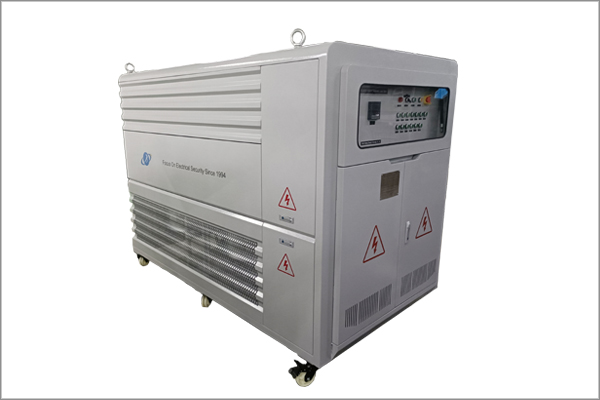
1000kW Load Bank
1000kW Load Bank
The primary role of load testing is a performance benchmark verifier. By simulating load conditions such as high concurrent access and peak data transmission in real business scenarios, it can accurately detect the bearing capacity limits of server clusters, storage systems, and network architectures. For example, it verifies whether the server CPU utilization and memory occupancy rate are within reasonable thresholds, whether the storage IOPS (Input/Output Operations Per Second) can match the peak business demand, and whether there are network bandwidth bottlenecks, thereby confirming whether the hardware configuration and software optimization of the data center meet the design standards.
Secondly, it acts as a hidden danger detector. Recessive problems that are difficult to expose in routine tests, such as heat dissipation failures under long-term high load, insufficient power supply stability, and software compatibility conflicts, will gradually emerge through load testing lasting for hours or even days. If these problems are not discovered during the acceptance phase, they may cause serious accidents such as system downtime and data loss during subsequent business operations. Load testing is precisely the key means to avoid such risks in advance.
In addition, load testing is a proofer of compliance and contract performance. Data center construction usually needs to meet specific industry standards (such as disaster recovery specifications for the financial industry) and performance indicators agreed in the contract. The quantitative data generated by load testing can serve as an objective basis for determining whether the acceptance standards are met, avoiding potential liability disputes between suppliers and demanders, and providing authoritative support for the formal delivery of the data center.
In summary, through scientific pressure simulation during the acceptance phase, load testing not only verifies the actual performance of the data center but also eliminates potential risks in advance, while providing quantitative evidence for compliant delivery, making it an important "gatekeeper" for data centers from construction to operation.
News Recommendation
-
 2026-08-21
TriumphLoad to Showcase Advanced Load Banks & Dummy Load Solutions at Middle East Energy 2026
-
 2026-05-28
TRIUMPH LOAD EXHIBITING AT ENERTEC ASIA 2026
-
 2024-09-11
TRIUMPH LOAD EXHIBITING AT Enlit Europe 2024 -BOOTH 7.H08
-
 2023-04-21
TRIUMPH LOAD EXHIBITING AT DATA CENTER WORLD GERMANY 2023-BOOTH F909
-
 2023-04-06
TRIUMPH LOAD EXHIBITING AT ELECTRIC POWER TECH KOREA 2023 – Booth G109